Problem Statement
3208. Alternating Groups II
Medium
There is a circle of red and blue tiles. You are given an array of integers colors and an integer k. The color of tile i is represented by colors[i]:
colors[i] == 0means that tileiis red.colors[i] == 1means that tileiis blue.
An alternating group is every k contiguous tiles in the circle with alternating colors (each tile in the group except the first and last one has a different color from its left and right tiles).
Return the number of alternating groups.
Note that since colors represents a circle, the first and the last tiles are considered to be next to each other.
Example 1:
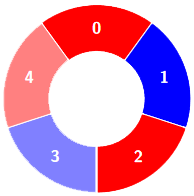
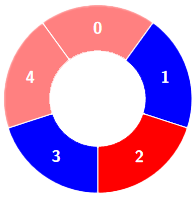
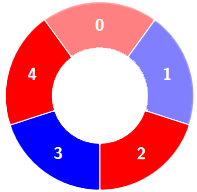
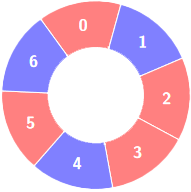
Input: colors = [0,1,0,1,0], k = 3
Output: 3
Explanation:
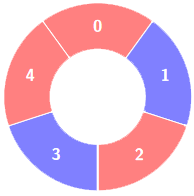
Alternating groups:
Example 2:
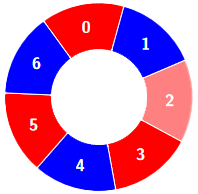
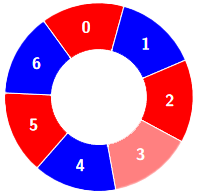
Input: colors = [0,1,0,0,1,0,1], k = 6
Output: 2
Explanation:
Alternating groups:
Example 3:
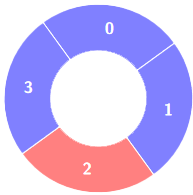
Input: colors = [1,1,0,1], k = 4
Output: 0
Explanation:
Constraints:
3 <= colors.length <= 1050 <= colors[i] <= 13 <= k <= colors.length