root of a binary tree, return the average value of the nodes on each level in the form of an array. Answers within 10-5 of the actual answer will be accepted.
Example 1:
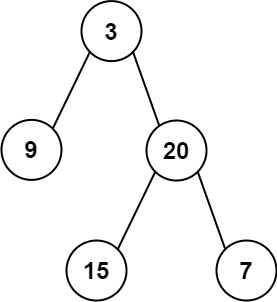
Input: root = [3,9,20,null,null,15,7] Output: [3.00000,14.50000,11.00000] Explanation: The average value of nodes on level 0 is 3, on level 1 is 14.5, and on level 2 is 11. Hence return [3, 14.5, 11].
Example 2:
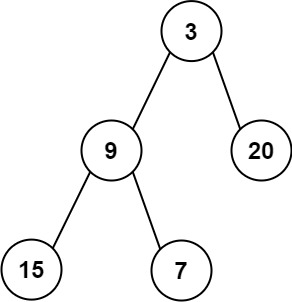
Input: root = [3,9,20,15,7] Output: [3.00000,14.50000,11.00000]
Constraints:
[1, 104].-231 <= Node.val <= 231 - 1/**
* Definition for a binary tree node.
* struct TreeNode {
* int val;
* TreeNode *left;
* TreeNode *right;
* TreeNode() : val(0), left(nullptr), right(nullptr) {}
* TreeNode(int x) : val(x), left(nullptr), right(nullptr) {}
* TreeNode(int x, TreeNode *left, TreeNode *right) : val(x), left(left), right(right) {}
* };
*/
class Solution {
public:
vector<double> averageOfLevels(TreeNode* root) {
queue<pair<TreeNode*, int>> q; // Queue holds Node & its height from top
vector <double> v;
if(!root)
return v;
q.push({root, 0}); //init
vector<pair<double, int>> sum_ct; // Tracks level order sum & node ct for avg finding
int visitedHt = -1; // current level being calculated
while(!(q.empty())){ // FIFO yields level order
auto f = q.front();
// cout << f.first->val << "\t";
if(visitedHt<f.second) // init level
sum_ct.push_back({0, 0});
sum_ct[f.second].first += f.first->val;
sum_ct[f.second].second++;
visitedHt = max(visitedHt, f.second);
q.pop();
if(f.first->left)
q.push({f.first->left, f.second+1});
if(f.first->right)
q.push({f.first->right, f.second+1});
}
for(int i=0; i<=visitedHt; i++) // finally calc avg
v.push_back(sum_ct[i].first/sum_ct[i].second);
return v;
}
};