Problem Statement
814. Binary Tree Pruning
Medium
Given the root of a binary tree, return the same tree where every subtree (of the given tree) not containing a 1 has been removed.
A subtree of a node node is node plus every node that is a descendant of node.
Example 1:
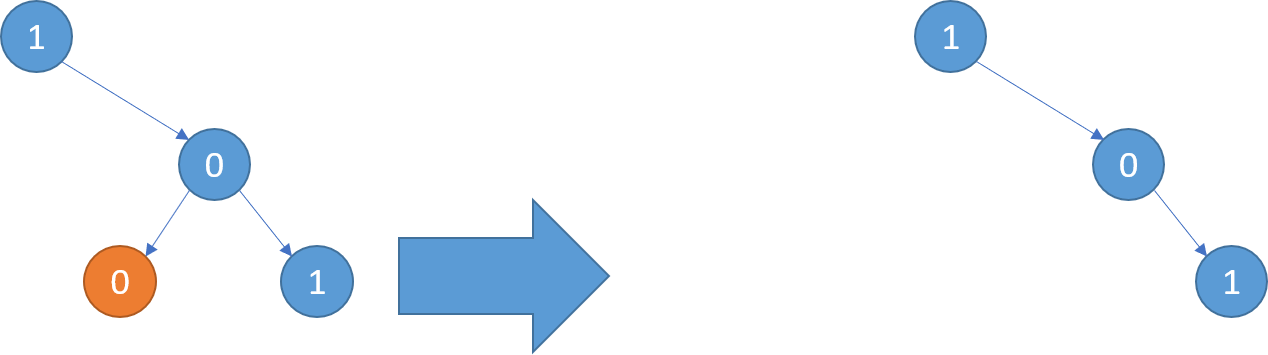
Input: root = [1,null,0,0,1]
Output: [1,null,0,null,1]
Explanation:
Only the red nodes satisfy the property "every subtree not containing a 1".
The diagram on the right represents the answer.
Example 2:
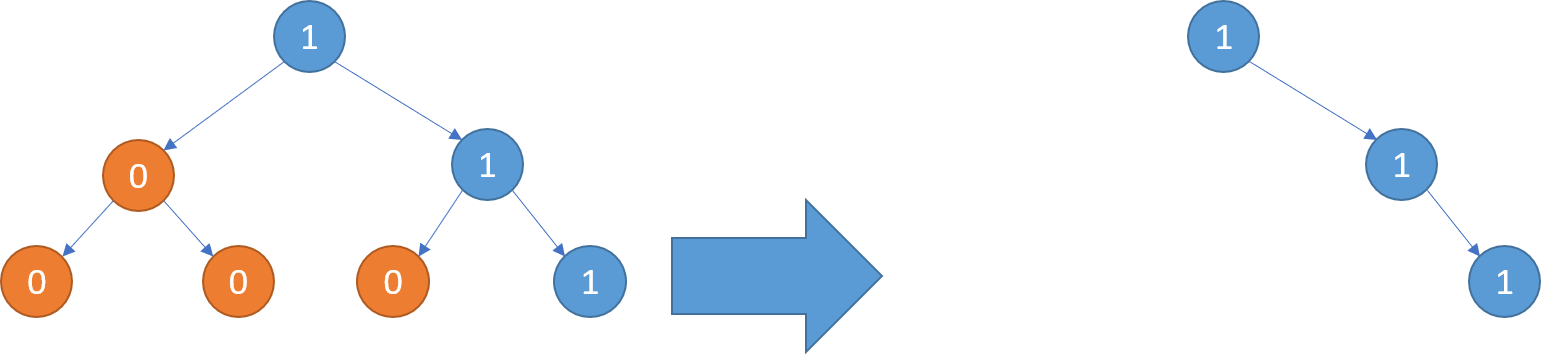
Input: root = [1,0,1,0,0,0,1]
Output: [1,null,1,null,1]
Example 3:
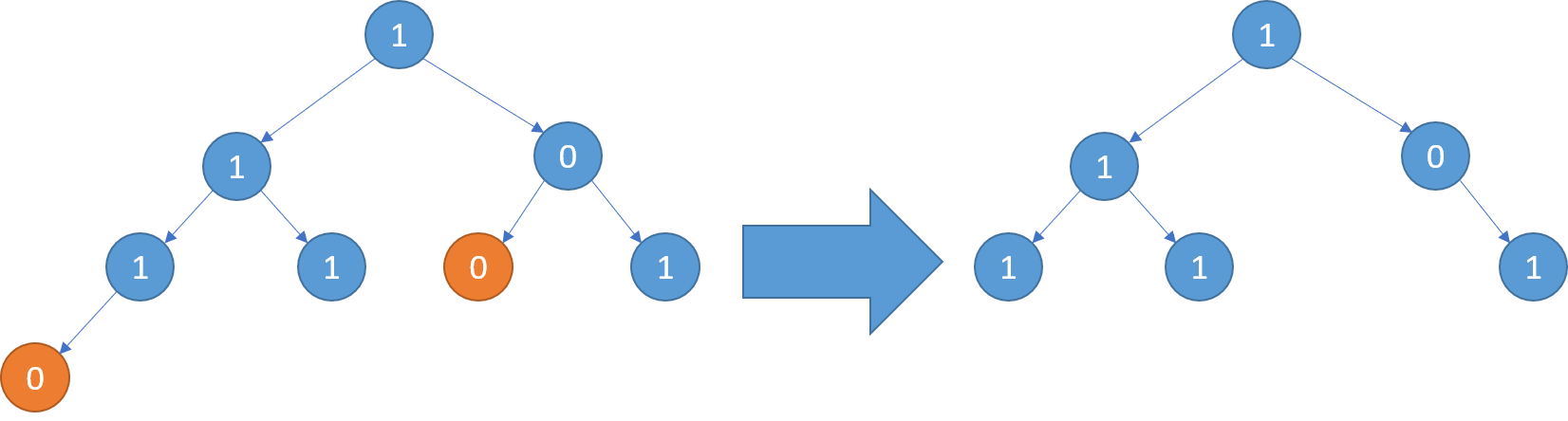
Input: root = [1,1,0,1,1,0,1,0]
Output: [1,1,0,1,1,null,1]
Constraints:
- The number of nodes in the tree is in the range
[1, 200]. Node.valis either0or1.